

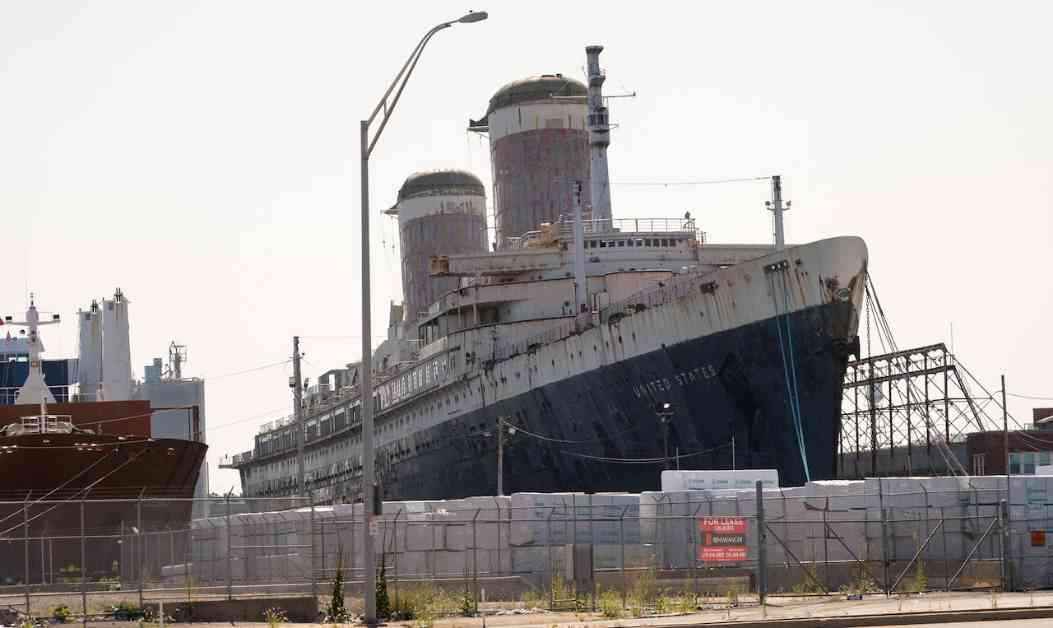
The SS United States, an iconic American ocean liner set to become the world’s largest artificial reef, faced delays in its departure from Philadelphia due to high winds in the area. Originally scheduled to leave on Monday after being delayed since December, the ship will now set sail on Wednesday around 12:51 p.m., according to Okaloosa County, the new owner of the vessel. This setback marks the second delay this week, attributed to the strong winds caused by high and low pressure systems across the country.
As plans unfold for the ship’s journey down the Delaware River, the Walt Whitman and Commodore Barry bridges will be temporarily closed to traffic to ensure the vessel’s safe passage. This precaution aims to minimize distractions for drivers as the SS United States navigates under the bridges before heading out to sea, where it will embark on a two-week voyage to Mobile, Alabama. The Delaware River Port Authority, overseeing both bridges, announced the temporary closures to accommodate the ship’s passage.
The decision to sink the ship in the Gulf of Mexico, recently renamed the “Gulf of America” by President Donald Trump, follows the purchase of the SS United States by Okaloosa County from the SS United States Conservancy. This move came after the vessel was on the brink of being scrapped in 2011, leading to failed restoration efforts and a legal battle that ultimately compelled its departure from Pier 82 in South Philadelphia. Once revered as a symbol of American shipbuilding prowess, the SS United States held the record for the fastest transatlantic crossing in its heyday.
Delays and Challenges in the Departure
Despite meticulous planning and preparations for the SS United States’ departure, unexpected weather conditions posed challenges for the vessel’s journey. The high winds that forced the postponement of the departure highlight the unpredictable nature of maritime operations and the need for flexibility in such circumstances. Okaloosa County’s acquisition of the ship, amidst a backdrop of legal disputes and preservation efforts, underscores the complex history and significance of the vessel as a maritime heritage.
Preserving History and Creating New Opportunities
The transformation of the SS United States into an artificial reef not only preserves its storied legacy but also opens up new avenues for marine conservation and recreational diving. The decision to sink the ship in the Gulf of Mexico reflects a strategic approach to repurposing maritime assets for environmental and economic benefits. As the vessel embarks on its final voyage to its new resting place, it symbolizes a blend of history, innovation, and sustainability in the maritime industry.
The SS United States’ departure from Philadelphia marks a significant milestone in the vessel’s journey from a historic ocean liner to a thriving underwater habitat. The temporary closures of the Walt Whitman and Commodore Barry bridges serve as a reminder of the intricate coordination required for such maritime operations. As the ship sets sail for its new home in the Gulf of Mexico, it carries with it a legacy of seafaring excellence and a promising future as a vibrant marine ecosystem.