

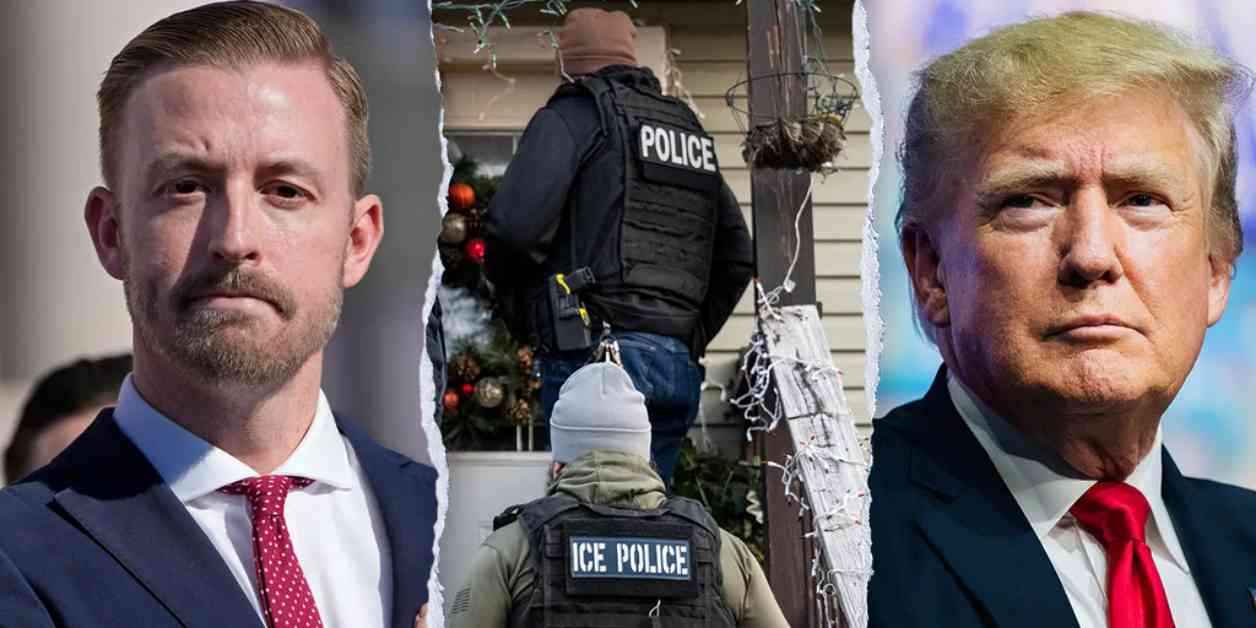
Oklahoma Superintendent Stands Firm on ICE Involvement: Advocating for Family Unity
In a recent clash on CNN, Oklahoma State School Superintendent Ryan Walters stood his ground regarding his stance on Immigration and Customs Enforcement (ICE) officers entering schools, rejecting the concept of “sanctuary schools.” Walters emphasized the importance of avoiding family separation in cases of illegal immigration, even if it means allowing federal agents into educational institutions.
The discussion arose from the Trump administration’s decision to lift the Biden-era “sensitive places” mandate, which previously restricted ICE agents from entering schools due to concerns about illegal immigrants hiding in these locations. Walters’ comments have sparked controversy and received pushback from various quarters, leading to heated debates on the subject.
CNN Anchor Brianna Keilar’s probing questions during an interview with Walters highlighted the potential trauma that students could face if subjected to ICE raids in their schools. Walters, however, reiterated the necessity of providing pertinent information to the Trump administration to ensure families are kept together during deportation proceedings, emphasizing the importance of transparency and cooperation in such situations.
Expert Insights on Immigration Policies
Several media outlets and critics have scrutinized Walters’ support for the Trump administration’s immigration policies, particularly a recent rule change requiring schools to report the number of students unable to provide proof of citizenship or legal status. The policy aims to enhance transparency and allocate resources effectively, but it has ignited debates about privacy, discrimination, and the implications for undocumented students and their families.
Walters defended the new reporting requirements, emphasizing the need for accurate data to support educational initiatives and address the impact of illegal immigration on school resources. He underscored the importance of prioritizing American students and citizens, highlighting the challenges faced by educators and communities impacted by the influx of undocumented individuals.
Addressing Border Security and Law Enforcement
In his interviews with various media outlets, Walters echoed the Trump administration’s emphasis on border security and law enforcement, advocating for a stringent approach to curb illegal immigration and criminal activities. He highlighted the impact of drug trafficking and criminal elements crossing the southern border, emphasizing the need for a law-and-order approach to protect American citizens and combat illicit activities.
Walters criticized the narrative propagated by some media outlets, accusing them of prioritizing the rights of illegal immigrants over the well-being of American communities. He called for a shift towards an “America First” policy, aligning with President Trump’s vision of prioritizing national interests and security. Walters urged other states to follow Oklahoma’s lead in supporting deportation efforts and reinforcing border security measures to uphold the rule of law and safeguard communities.
In conclusion, the debate surrounding immigration policies and ICE involvement in schools continues to provoke intense discussions and differing opinions. While some advocate for stringent enforcement measures to address illegal immigration, others emphasize the importance of compassion, transparency, and protection for vulnerable populations. As policymakers navigate these complex issues, the need for empathy, collaboration, and informed decision-making remains paramount to ensure the well-being of all individuals and uphold the principles of justice and equity.