

In a bold move that has caught the attention of both the United States and Latin America, the government of Honduras has announced its decision to extradite an undocumented immigrant accused of killing a young Iowa woman back in 2016. This case, which gained national prominence during President Trump’s 2016 campaign, has resurfaced as Eswin Mejia, the accused individual, faces extradition to the U.S. for his alleged involvement in the tragic death of Sarah Root.
The incident took place in January 2016 when Mejia, reportedly driving under the influence, collided with Root’s vehicle at a stoplight in Omaha, Iowa. After being detained and charged, Mejia fled the country while on bond, evading justice for years. However, the long arm of the law finally caught up with him as he was apprehended in a town located approximately 125 miles northwest of Tegucigalpa, the capital of Honduras.
Enrique Reina, the Honduran foreign minister, shed light on the situation, revealing that Mejia appeared before a Supreme Court judge following his arrest. The court has since ordered his detention, and a judge will decide on the extradition request made by the U.S. authorities. Reina emphasized the importance of due process, indicating that this decision is part of a broader pattern of cooperation between Honduras and the United States, with over 50 extradition requests received since President Xiomara Castro assumed office in 2022.
Case of National Interest
The tragic death of Sarah Root at the hands of an undocumented immigrant struck a chord with the American public, resonating beyond state lines and political affiliations. Root, a promising young woman with her whole life ahead of her, fell victim to a senseless act of recklessness that reverberated throughout the nation. Her untimely demise became a rallying cry for stricter immigration policies and heightened border security, fueling debates and shaping public opinion on a contentious issue.
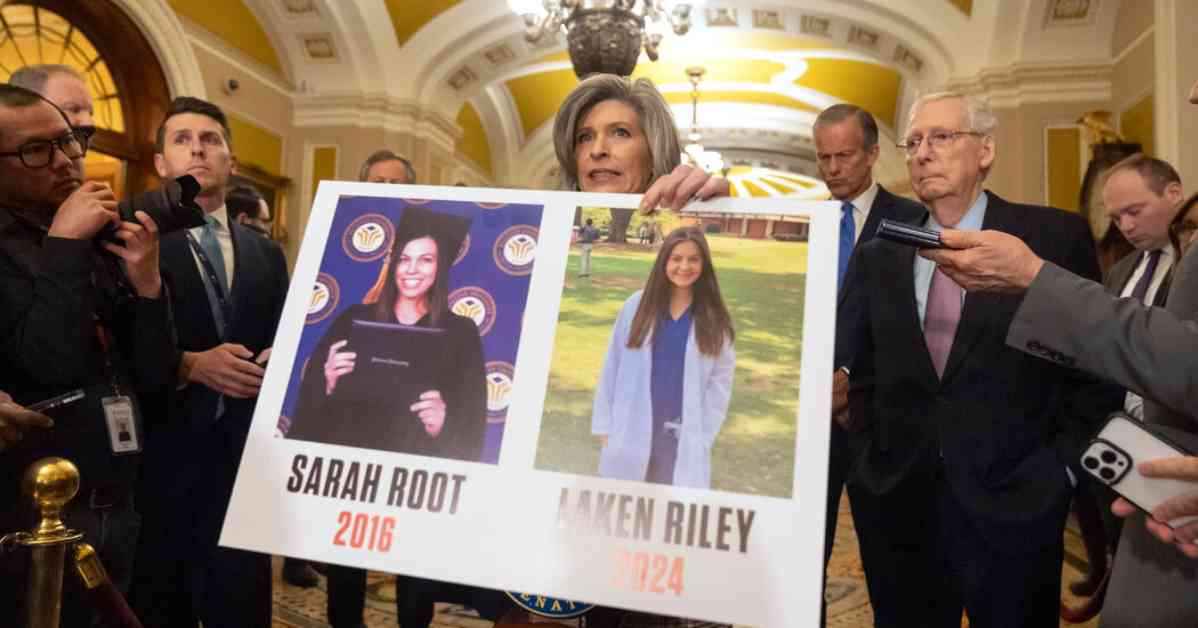
Senator Joni Ernst, a prominent figure in Iowa politics, has been a vocal advocate for justice in Root’s case, tirelessly pushing for accountability and closure for the Root family. Holding up a poster adorned with photos of Sarah Root and Laken Riley, another victim of a similar tragic incident, Ernst has been a steadfast voice for the victims, ensuring that their stories are not forgotten amidst the political discourse and bureaucratic processes. Root’s legacy lives on through the efforts of individuals like Ernst, who refuse to let her memory fade into oblivion.
A Test of Diplomatic Relations
The extradition of Eswin Mejia marks a crucial moment in the diplomatic relations between Honduras and the United States, testing the waters of cooperation and mutual respect between the two nations. As the extradition process unfolds, both countries are navigating a complex legal terrain that requires adherence to international protocols and legal frameworks. The handling of Mejia’s case will set a precedent for future extradition requests and serve as a litmus test for the efficacy of cross-border law enforcement collaboration.
In light of recent geopolitical shifts and global challenges, the extradition of criminal suspects has taken on renewed significance, reflecting the interconnected nature of modern crime and the imperative of international cooperation in combating transnational threats. The case of Eswin Mejia underscores the importance of judicial systems working in tandem to ensure that perpetrators of heinous crimes are brought to justice, regardless of borders or jurisdictional boundaries.
As the wheels of justice turn and the fate of Eswin Mejia hangs in the balance, the world watches with bated breath, eager to see how this high-profile extradition case will unfold. The story of Sarah Root, a young woman whose life was cut short by a tragic incident, serves as a poignant reminder of the human cost of crime and the enduring quest for justice in a complex and interconnected world.