

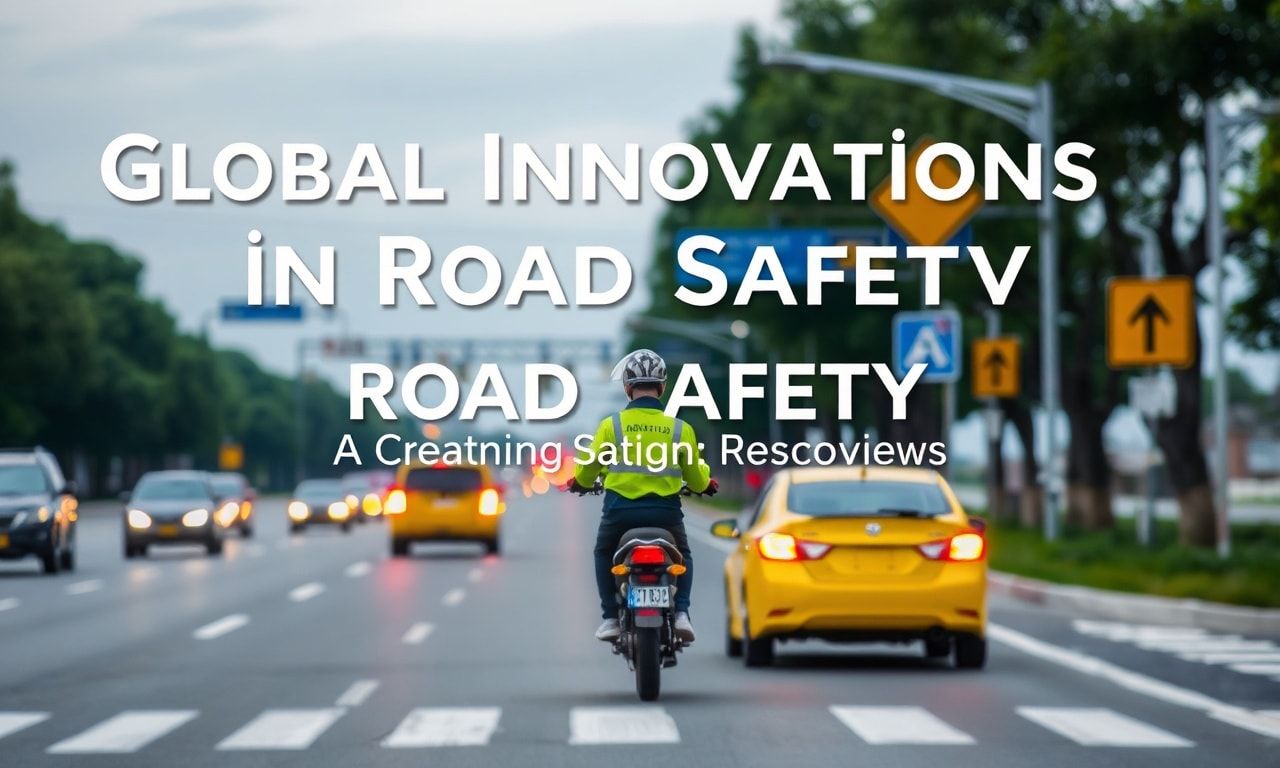
The Evolution of Road Safety
The landscape of road safety has undergone a significant transformation over the past few decades. With advancements in technology and a greater emphasis on public health, the focus on reducing road accidents and fatalities has intensified. Governments, automotive manufacturers, and tech companies are collaborating to implement innovative solutions that prioritize safety. This article delves into the latest developments and trends in road safety, highlighting the key players and technologies driving this crucial evolution.
Technological Advancements in Vehicle Safety
One of the most notable areas of progress is in vehicle safety technology. Modern cars are equipped with a plethora of features designed to prevent accidents and protect passengers. From adaptive cruise control to lane-keeping assist, these technologies are becoming standard in many vehicles. For instance, the latest car safety features update from autonewsx.com highlights the integration of artificial intelligence and machine learning in predictive safety systems. These systems can anticipate potential hazards and take corrective actions before an accident occurs, significantly reducing the risk of collisions.
The Role of Autonomous Vehicles
Autonomous vehicles represent a paradigm shift in road safety. By eliminating human error, which is a leading cause of accidents, self-driving cars have the potential to drastically reduce road fatalities. Companies like Tesla, Waymo, and Uber are at the forefront of this revolution, investing heavily in research and development. While fully autonomous vehicles are still in the testing phase, the progress made so far is promising. The integration of sensors, cameras, and advanced algorithms enables these vehicles to navigate complex environments with a high degree of accuracy and safety.
Infrastructure and Policy Changes
In addition to technological advancements, infrastructure and policy changes play a crucial role in enhancing road safety. Governments worldwide are implementing stricter regulations and investing in better road infrastructure. For example, the European Union’s Vision Zero initiative aims to eliminate all traffic fatalities and serious injuries by 2050. This initiative involves a combination of improved road design, stricter enforcement of traffic laws, and public awareness campaigns. Similarly, the United States has seen a push for better road signage, improved lighting, and the installation of safety barriers in high-risk areas.
Public Awareness and Education
Public awareness and education are also vital components of road safety. Campaigns aimed at promoting safe driving practices, such as the importance of wearing seatbelts and avoiding distracted driving, have been effective in reducing accidents. Organizations like the National Highway Traffic Safety Administration (NHTSA) in the U.S. and the World Health Organization (WHO) globally, play a significant role in disseminating information and advocating for safer roads. Educational programs in schools and community centers further reinforce the importance of road safety, ensuring that future generations are well-informed and responsible drivers.
The Impact of Road Safety Innovations
The impact of these innovations is already evident. According to the WHO, road traffic injuries are a leading cause of death worldwide, with an estimated 1.3 million people dying each year. However, the implementation of new safety technologies and policies has led to a gradual decline in these statistics. For instance, countries like Sweden and Norway have seen a significant reduction in road fatalities, thanks to their proactive approach to road safety. These success stories serve as a model for other nations, demonstrating the effectiveness of a multi-faceted approach to road safety.
Future Prospects
Looking ahead, the future of road safety is bright. Emerging technologies such as vehicle-to-vehicle (V2V) communication and vehicle-to-infrastructure (V2I) communication promise to further enhance safety by enabling real-time data sharing between vehicles and road infrastructure. This interconnectedness can help prevent accidents by providing drivers with timely information about road conditions, traffic congestion, and potential hazards. Additionally, the continued development of autonomous vehicles and advanced driver-assistance systems (ADAS) will likely lead to even greater improvements in road safety.
In conclusion, the global push for better road safety is a multifaceted endeavor involving technological advancements, policy changes, and public education. The collaboration between governments, automotive manufacturers, and tech companies is crucial in achieving the goal of safer roads. As we continue to innovate and implement these solutions, the vision of accident-free roads becomes increasingly attainable. The journey towards zero road fatalities is ongoing, but the progress made so far is a testament to the collective efforts of various stakeholders committed to making our roads safer for everyone.
As the U.S. transportation sector undergoes significant changes, key trends shaping the industry offers a comprehensive look at the latest developments and their implications.
As digital markets evolve, a new trend is emerging that combines sustainability with technology; learn more about the rise of eco-digital marketing in our latest feature.
As digital transformation continues to reshape industries, understanding the fundamentals of digital marketing and SEO becomes crucial for staying ahead in the news and journalism landscape.