

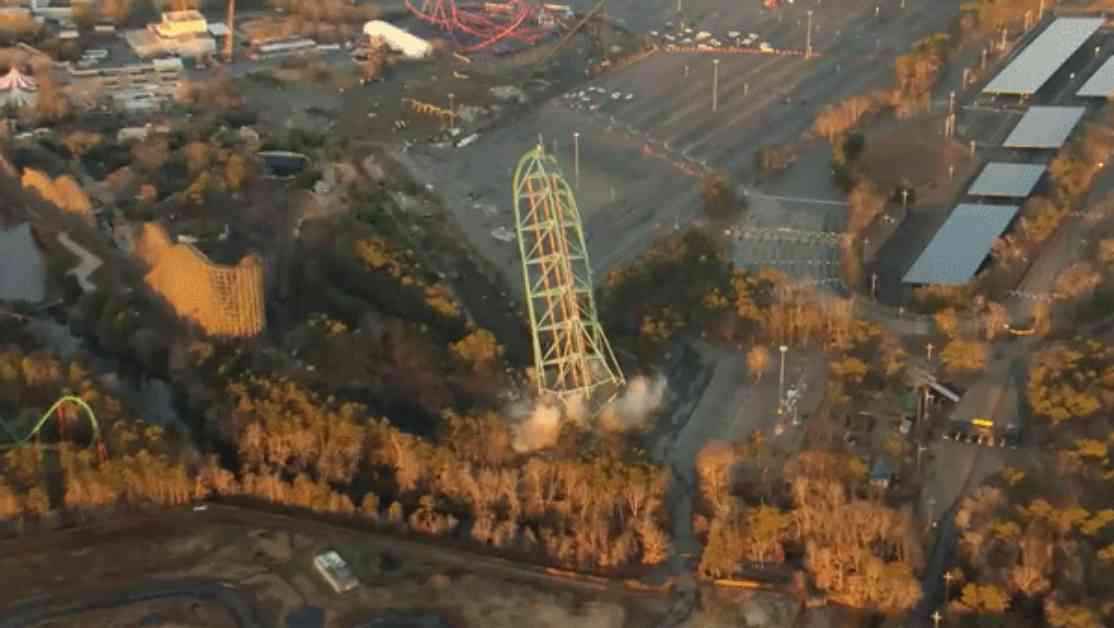
A thrilling chapter in amusement park history came to a crashing end on Friday as a record-breaking roller coaster met its demise at Six Flags Great Adventure in New Jersey. The iconic Kingda Ka roller coaster, once the tallest and fastest in the world, was destroyed by demolition crews, marking the closure of a beloved ride that had been a staple of the park since its opening in 2005.
The demolition of Kingda Ka, along with its companion drop tower Zumanjaro: Drop of Doom, was a bittersweet moment for fans of the ride. Aerial footage captured the steel beams of the roller coaster collapsing in a cloud of smoke, bringing an end to nearly two decades of adrenaline-pumping thrills.
End of an Era
Kingda Ka’s closure in November was met with mixed emotions from park visitors who had come to love the heart-pounding experience of hurtling from 0 to 128 mph in just 3.5 seconds. The ride’s towering height of 456 feet and its jaw-dropping 90-degree angle ascent had made it a must-visit attraction for thrill-seekers from around the world.
“It’s always sad to see a beloved ride go,” said Brian Bacica, president of Six Flags Great Adventure. “But we are excited to make way for a new, multi-record-breaking launch coaster that will take the park’s offerings to new heights of excitement.”
Looking Ahead
The closure of Kingda Ka is part of a larger $2 billion investment by Six Flags to bring new rides, attractions, dining options, and technology enhancements to the park. The company has promised an unparalleled level of fun and excitement for guests of all ages, with plans to unveil the new coaster in 2026.
As the dust settles on the demolition of Kingda Ka, fans of the iconic roller coaster are left with memories of the exhilarating twists, turns, and drops that made it a legendary ride. While the future of the park holds promise for new adventures, the legacy of Kingda Ka will live on in the hearts of those who dared to take on its towering heights and lightning-fast speeds.
Fox News Digital’s Sophia Compton, Ashlyn Messier, and Christine Rousselle contributed to this report.