

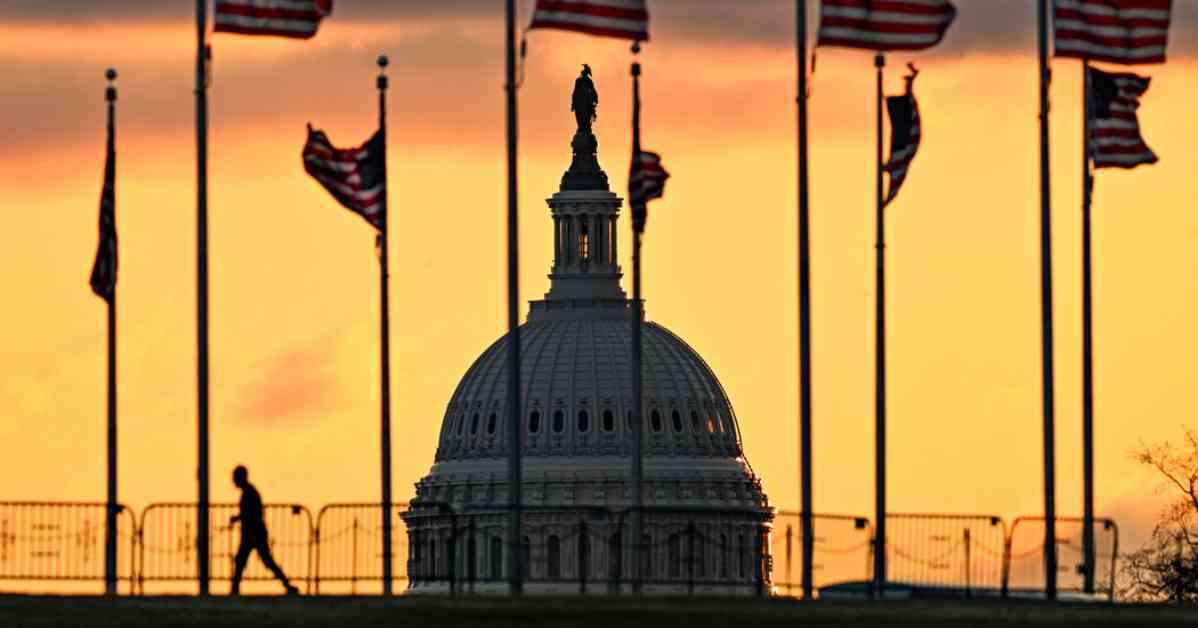
The Senate recently voted on a budget outline designed to advance President Trump’s domestic policy agenda, showcasing a push for increased spending on immigration enforcement and defense while cutting other federal programs. This move is a critical step for Republicans to utilize budget reconciliation, a process that enables legislation affecting government revenues to pass the Senate with a simple majority vote. The House and Senate, both under Republican control, have been crafting separate budget plans, sparking debate on how to proceed. While the House Republicans are divided and delayed in developing their blueprint, the Senate is forging ahead with their proposal.
Understanding the Budget Resolution
In essence, a budget resolution is a framework that Congress is expected to adopt annually, establishing a top-line figure for federal funding and outlining how that money should be allocated. Once approved, lawmakers on the Appropriations Committees are tasked with distributing federal funds in accordance with the blueprint. However, in recent years, Congress has neglected to pass such a resolution, avoiding tough decisions about program funding and cuts. Instead, congressional leaders have collaborated with senior appropriators to agree on overall spending numbers and pass annual spending bills without a formal budget resolution.
As the Senate and House navigate the complexities of budget planning, the stakes remain high while the process proves challenging. The Senate’s recent vote underscores the ongoing battle within the Republican party to steer President Trump’s agenda forward. The proposed increase in spending on immigration enforcement and defense, coupled with cuts to other federal programs, reflects the party’s priorities and sets the stage for potential legislative battles ahead.
Implications of Budget Reconciliation
Budget reconciliation serves as a crucial tool for passing major policy legislation through Congress, enabling measures like tax cuts, healthcare reforms, and economic relief packages to advance despite opposition from the minority party. This streamlined process requires a budget resolution as the initial step, setting the stage for subsequent legislative action. With the Senate’s recent approval of a budget outline, Republicans are positioning themselves to leverage budget reconciliation in pursuit of key policy objectives outlined in President Trump’s agenda.
The contrast between the House and Senate approaches to budget planning highlights the complexities and divisions within the Republican party. While the Senate pushes ahead with its budget proposal, the House grapples with internal disagreements and delays in formulating a unified plan. The divergent paths taken by these two chambers underscore the challenges of reaching consensus on budget priorities and navigating the intricate legislative process.
In conclusion, the ongoing debate over the budget resolution illuminates the intricate dynamics at play within Congress as Republicans seek to advance their policy agenda. The diverging strategies pursued by the House and Senate underscore the complexities and divisions within the party, reflecting the broader challenges of governance and decision-making in a politically charged climate. As the budget planning process unfolds, the nation watches with bated breath to see how these deliberations will shape the future of key policy initiatives and government spending.