

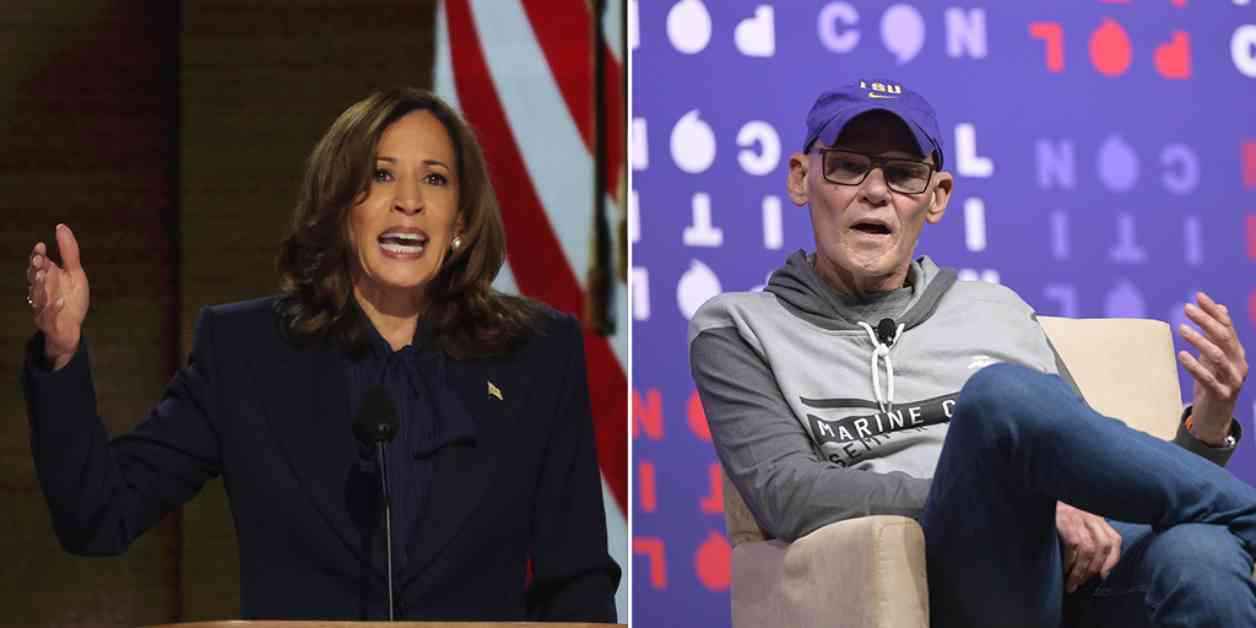
In a recent interview with PBS’ Margaret Hoover, veteran Democratic strategist James Carville made a striking comparison between the Democrats’ choice of former Vice President Kamala Harris for the 2024 presidential election and starting a “7th string quarterback” in the Super Bowl. Carville’s candid remarks shed light on the challenges faced by the Democratic Party in selecting a candidate who could capture the attention and trust of voters on a national stage.
Carville’s assertion that the Democrats essentially fielded their seventh-best option for the presidency highlights a critical issue within the party’s leadership and strategic decision-making. Drawing a parallel to a Super Bowl scenario, he emphasized the importance of acknowledging and addressing the shortcomings in their candidate selection process. By likening Harris to a quarterback who struggles to lead the team to victory, Carville underscored the necessity of honest reflection and course correction within the Democratic Party.
The seasoned strategist further emphasized that Democratic voters yearned for a candidate who could articulate a coherent message and demonstrate a track record of accomplishments. His comments underscored the frustration felt by many within the party regarding Harris’ perceived inadequacies in effectively communicating and connecting with the electorate. Carville’s critique of the Democratic Party’s decision to nominate Harris as their presidential candidate reflects a broader concern about the party’s ability to field strong contenders in a highly competitive political landscape.
Challenges Faced by Kamala Harris
Throughout the 2024 election campaign, Kamala Harris encountered significant challenges related to her ability to engage in unscripted conversations and deliver coherent responses. Critics often pointed to her tendency to provide convoluted or nonsensical answers during public appearances, raising doubts about her capacity to handle the demands of a presidential campaign. The scrutiny surrounding Harris’ communication skills highlighted the importance of effective messaging and articulation in the realm of national politics.
Carville’s comparison of Harris to a seventh-string quarterback underscored the extent to which her perceived shortcomings resonated with voters and party insiders alike. The analogy served as a poignant reminder of the critical role that leadership and communication play in shaping public perception and electoral outcomes. By highlighting Harris’ struggles in effectively conveying her message, Carville brought attention to the broader challenges faced by political candidates in navigating the complexities of modern campaigning.
The Importance of Strategic Candidate Selection
Carville’s analysis of the Democratic Party’s decision to nominate Harris for the 2024 presidential election shed light on the intricacies of candidate selection and strategic positioning in contemporary politics. His critique of the party’s choice to field Harris as their standard-bearer reflected a broader concern about the need for strong, compelling leadership in a competitive electoral environment. By drawing attention to the significance of talent, messaging, and accomplishment in candidate selection, Carville highlighted the importance of aligning candidate attributes with voter expectations and party objectives.
The seasoned strategist’s comments underscored the challenges faced by political parties in identifying and promoting candidates who can effectively communicate, inspire, and lead. The resonance of Carville’s critique within Democratic circles signaled a broader conversation about the party’s future direction and leadership priorities. As the political landscape continues to evolve, the lessons drawn from the 2024 election cycle serve as a critical reminder of the importance of strategic foresight and candidate viability in shaping electoral outcomes.
Carville’s candid assessment of the Democratic Party’s choice of Kamala Harris for the 2024 presidential election offers valuable insights into the complexities of modern politics and candidate selection. By highlighting the challenges faced by Harris in connecting with voters and articulating a compelling message, Carville emphasized the need for strategic leadership and effective communication in shaping public perception and electoral success. As the Democratic Party navigates the aftermath of the 2024 election, Carville’s remarks serve as a timely reminder of the importance of talent, messaging, and strategic foresight in driving political outcomes to be successful.