

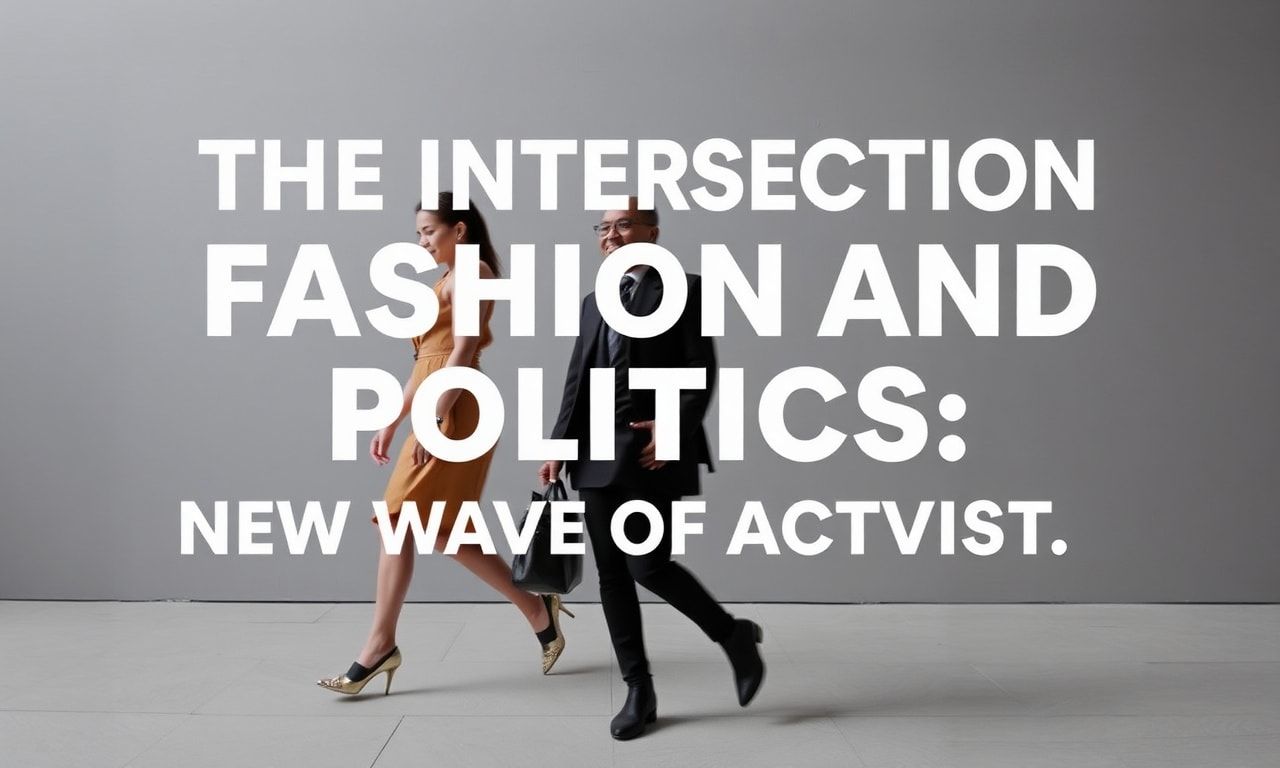
The Rise of Fashion as a Political Tool
The fashion industry has long been a reflection of societal trends and cultural shifts. However, in recent years, it has evolved into a powerful platform for political activism. Designers and consumers alike are using fashion as a means to express their views on social and political issues, creating a new wave of activism that transcends traditional boundaries.
The Influence of Social Media
Social media has played a pivotal role in amplifying the voice of fashion activists. Platforms like Instagram, TikTok, and Twitter have become virtual runways where individuals can showcase their political beliefs through their style. Hashtags such as #FashionRevolution and #WearYourValues have gained traction, encouraging users to share their outfits and the messages behind them. This digital movement has democratized fashion, making it accessible to a global audience and fostering a sense of community among like-minded individuals.
Moreover, social media has enabled fashion enthusiasts to learn how to style for different fashion tribes, allowing them to align their personal style with their political beliefs. From minimalist aesthetics to bold, statement-making pieces, there is a growing awareness of the power of clothing as a form of self-expression and resistance.
High Fashion and Political Statements
The high fashion world has also embraced political activism, with renowned designers using their collections to make powerful statements. For instance, Maria Grazia Chiuri, the creative director of Dior, has consistently incorporated feminist themes into her designs. Her Spring/Summer 2020 collection featured slogans such as “We Should All Be Feminists” and “Sisters Together,” sparking conversations about gender equality and women’s rights.
Similarly, Virgil Abloh, the late creative director of Louis Vuitton’s menswear line, used his platform to address issues of race and identity. His designs often featured bold graphics and text, challenging the status quo and advocating for inclusivity. These high-profile examples demonstrate how fashion can be a catalyst for change, inspiring both industry professionals and the general public to engage in meaningful dialogue.
The Role of Sustainable Fashion
Sustainability has become a central theme in the fashion industry, with many activists advocating for eco-friendly practices. The fast fashion model, which prioritizes quick turnover and low costs, has been criticized for its environmental impact. In response, a growing number of designers and consumers are embracing sustainable fashion, opting for ethical materials and fair labor practices.
Brands like Patagonia and Stella McCartney have been at the forefront of this movement, promoting transparency and sustainability in their supply chains. By choosing to support these brands, consumers are not only making a fashion statement but also aligning themselves with a broader political agenda that prioritizes environmental conservation and social responsibility.
The Future of Fashion Activism
As the fashion industry continues to evolve, the intersection of fashion and politics is likely to become even more pronounced. With the rise of digital activism and the growing awareness of social and environmental issues, fashion is poised to play an increasingly important role in shaping public discourse.
Designers and consumers alike have the power to drive change, using their creativity and purchasing power to advocate for a more just and sustainable world. By embracing fashion as a form of activism, individuals can contribute to a collective movement that transcends borders and cultures, fostering a sense of unity and purpose.
In conclusion, the fashion industry is no longer just about aesthetics; it is a powerful tool for political expression and social change. As we navigate an increasingly complex world, fashion activism offers a means of resistance, solidarity, and hope, proving that style can be a force for good.
As winter approaches, fashion enthusiasts in Türkiye can stay ahead of the curve by exploring this year’s top trends in our latest feature.
As global trends continue to evolve, Las Vegas adapts for winter in ways that reflect broader shifts in tourism and hospitality.
For more insights on this topic, you might find The Timeless Elegance of Kimono: A particularly informative.