

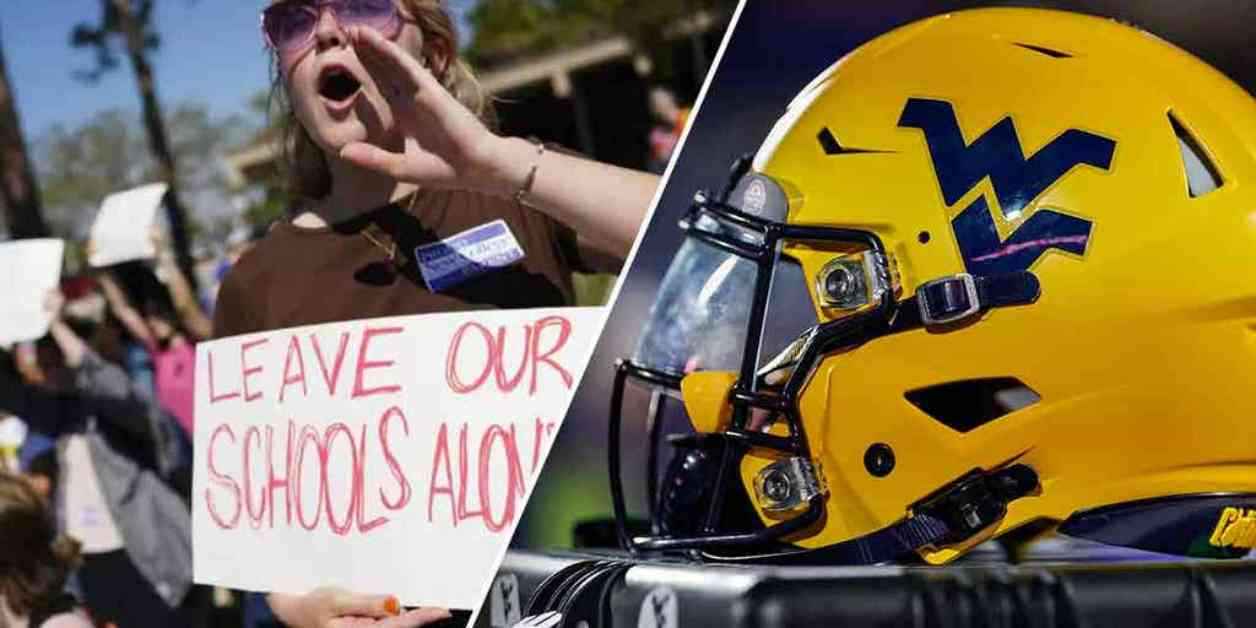
Controversy over the closure of Diversity, Equity & Inclusion (DEI) offices in universities has sparked a heated debate across the nation. West Virginia University recently made headlines by shutting down its DEI office, joining a growing number of institutions responding to state and federal directives to eliminate what some call reverse-discrimination practices.
WVU’s DEI office, known for its “Tunnel of Awareness” and “Yappy Hour” events, has been replaced with a Division of Campus Engagement and Compliance focusing on ADA and Title IX regulations. The move came after GOP Gov. Patrick Morrisey issued an executive order deeming DEI practices unconstitutional, echoing sentiments expressed by President Donald Trump.
Morrisey’s stance against the “woke virus” sweeping schools has drawn both support and criticism. He emphasized the need for equality under the law, expressing concerns about special preferences benefiting specific racial groups. The governor commended WVU for aligning with his directive, lauding the university’s decision to close the DEI office.
April Kaull, WVU’s executive director of communications, clarified that the shift in focus was not a mere rebranding but a strategic realignment in line with state policies. The university’s new Division of Campus Engagement and Compliance aims to ensure compliance with federal and state guidelines, particularly focusing on Title IX and the Americans with Disabilities Act.
Michigan, Texas, and several other states have also taken steps to dismantle DEI programs, citing a commitment to merit-based admissions and freedom of speech. Amidst these changes, Mount Holyoke College and Northeastern University have opted for different approaches, emphasizing inclusion and belonging in their respective institutions.
However, the impact of these closures extends beyond administrative decisions. Rutgers University had to cancel an internship session for students from Historically Black Colleges and Universities (HBCUs) due to halted federal funding, highlighting the far-reaching consequences of shifting DEI policies. Missouri State University similarly announced the discontinuation of its DEI programs, attributing the decision to new state requirements and budget considerations.
As universities navigate this evolving landscape of diversity initiatives, the debate over DEI practices continues to provoke discussions about equality, inclusion, and the role of higher education in shaping future generations. While some advocate for a reimagined approach to fostering diversity, others argue for a more streamlined focus on compliance and universal principles of fairness.
In this climate of change and controversy, the future of DEI in academia remains uncertain. As institutions grapple with competing demands and ideological shifts, the broader implications of these decisions on students, faculty, and the educational landscape as a whole underscore the complex nature of diversity, equity, and inclusion in today’s society.