

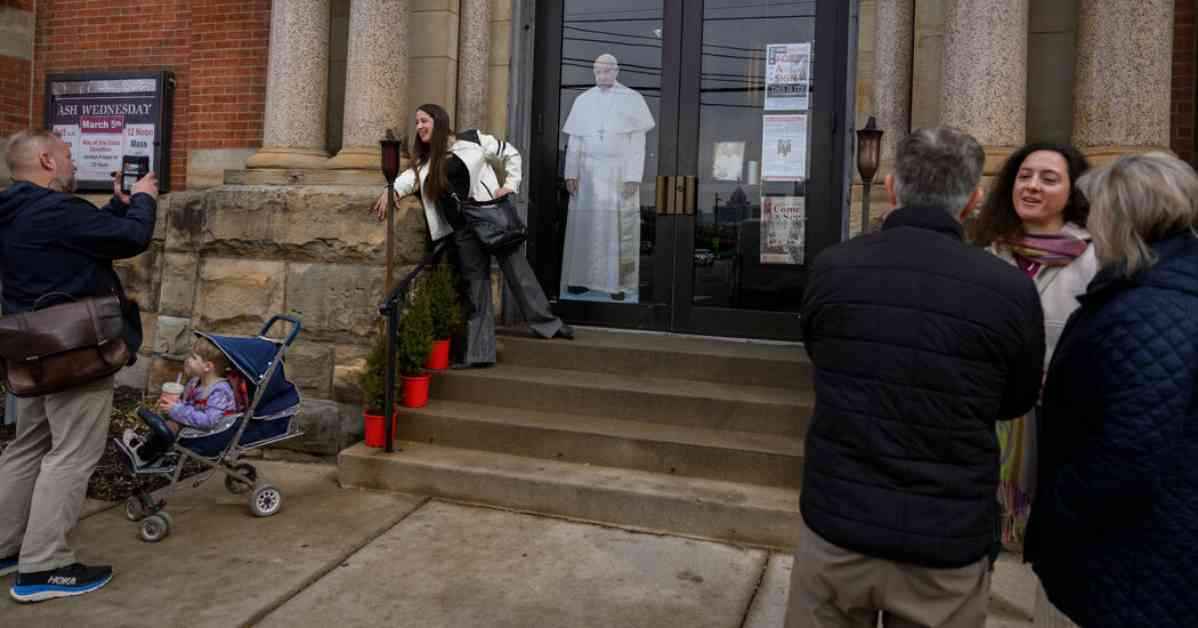
On a brisk winter morning in the heart of Pittsburgh, congregants slowly made their way into the Immaculate Heart of Mary Church for Sunday Mass. Once a bustling center of Catholic life in the Polish Hill neighborhood, the church now stood with empty pews, a stark reminder of the shifting tides of time.
Mark Dobies and his wife, Kim, shared stories of their family’s deep roots in the church, dating back to the days of their Polish immigrant ancestors who helped build its grand structure. As they reflected on the past, it became clear that the once vibrant community that filled the church had dispersed, leaving behind a sense of loss and change.
The decline of ethnic congregations in working-class neighborhoods, coupled with the impact of the church’s long-standing sexual abuse scandal, had contributed to this transformation. Now, as the city grappled with the news of Pope Francis’s failing health, a new sentiment emerged – one of concern mingled with a touch of indifference.
In a city where Catholic traditions run deep, the reaction to Pope Francis’s health was a mix of worry and detachment. While some lit candles in his honor, there were no large public gatherings or overt displays of collective anxiety. Instead, a sense of quiet contemplation seemed to settle over the city, as individuals grappled with their own feelings towards the aging pontiff.
Reflecting on a Changing Landscape
As the aging brick walls of the Immaculate Heart of Mary Church bore witness to the ebb and flow of the city’s Catholic community, the Dobies family’s personal connection to the church served as a poignant reminder of the shifting landscape. Their memories of weddings and baptisms held within its walls, now contrasted with the emptiness that surrounded them on Sunday mornings.
The decline of traditional ethnic congregations was not unique to Pittsburgh but reflected a broader trend seen across the country. The disappearance of manufacturing jobs and the fallout from the church’s abuse scandal had left a mark on once-thriving communities, leading to a sense of disconnection and loss.
Ambivalence in the Face of Frailty
In the midst of this changing narrative, the news of Pope Francis’s declining health added another layer of complexity to Pittsburgh’s relationship with the Catholic Church. While some, like Carol Novak, offered prayers for the pontiff, others admitted to a lack of familiarity with him.
As the 88-year-old pope grew increasingly frail, the city’s response was marked by a mixture of concern and detachment. The absence of large-scale vigils or public demonstrations of support underscored a sense of distance from the Vatican and the figurehead of the Catholic faith.
In the quiet halls of St. Anthony Chapel, where relics abound and history whispers through the air, the faithful gathered to pray for the pontiff’s well-being. Yet, for many, their connection to Pope Francis remained a distant one, shaped more by headlines than personal devotion.
As Pittsburgh grappled with the news of Pope Francis’s failing health, a city once deeply rooted in Catholic tradition found itself at a crossroads. The echoes of a vibrant past mingled with the uncertainties of the present, creating a complex tapestry of emotions that reflected a community in transition.