

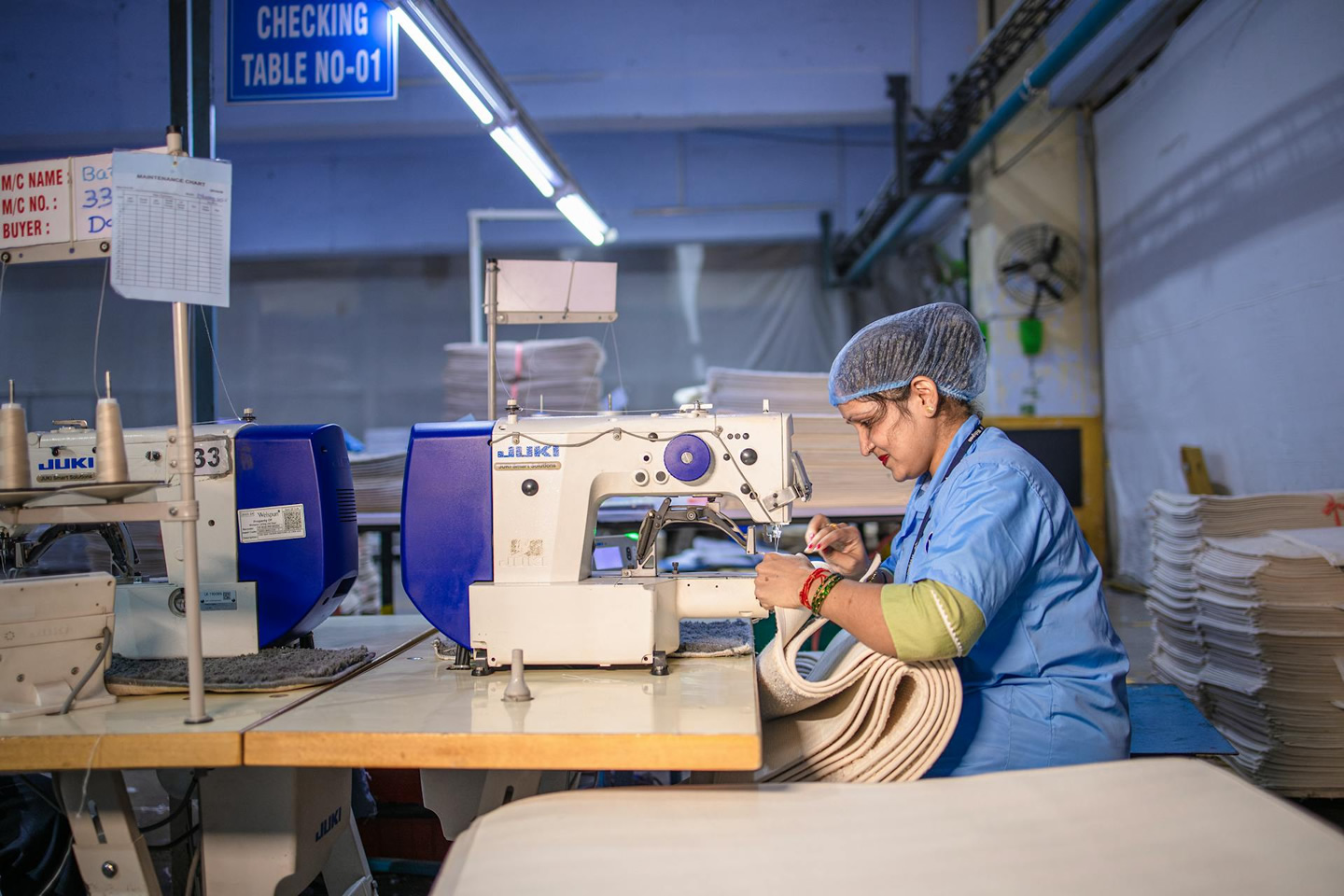
Industrial sewing machines don’t get the spotlight that CNC mills, robots, or 3D printers do—but they’re everywhere. If a product contains flexible sheet material (textile, leather, coated fabric, technical laminate, webbing, or even some foams), there’s a good chance an industrial sewing process helped make it.
In the modern world, industrial sewing is less “needle and thread” and more engineered assembly : high-speed, repeatable joining; programmable stitch patterns; automated material handling; specialty stitches for strength or sealing; and strict quality control. It’s the backbone of industries that need products that are durable, repairable, scalable to manufacture, and comfortable to use .
Below is a detailed look at where industrial sewing is used, the product range it enables, and why stitching often beats alternatives like adhesives, welding, riveting, or molding.
What makes a sewing machine “industrial”?
Industrial machines are designed for volume, consistency, and demanding materials . Compared to domestic machines, they typically offer:
Higher duty cycle : built to run all day, every day.
Greater speed and power : many lockstitch machines exceed 3,000–5,000 stitches per minute (SPM), while heavy-duty machines prioritize torque for thick stacks.
Material specialization : from delicate silk to ballistic nylon, leather, canvas, sailcloth, and multilayer composites.
Precision feeding systems : walking foot, needle feed, or compound feed to keep slippery or thick materials aligned.
Automation-ready features : servo motors, programmable stitch lengths, pattern sewing, auto back-tack, thread trimming, and integration into production lines.
Industrial sewing isn’t one machine—it’s an ecosystem: single-needle lockstitch for general joining, overlock/sergers for edge finishing, coverstitch for stretch seams, bar-tack for reinforcement, buttonholers, binders, post-bed and cylinder-bed machines for 3D shapes, and long-arm machines for large panels like tents or sails. One only has to take a look at the range of sewing machines and attachments available on a website such as www.atlatt.com to get an idea of the number of different types of sewing machines and tools in use.
The product universe that relies on industrial sewing
Industrial sewing shows up in far more than clothing. Here’s a wide-ranging view of what modern production stitches together.
1) Apparel and fashion: from fast fashion to technical garments
This is the obvious one, but the variety is enormous:
T-shirts, jeans, jackets, suits, dresses
Sportswear and activewear (stretch seams, coverstitching)
Outdoor clothing (reinforced seams, layered fabrics)
Workwear (high-abrasion fabrics, heavy thread, triple stitching)
Footwear components (uppers, linings, straps)
Even highly automated clothing factories still rely heavily on sewing because fabric is flexible and variable—harder to fixture than rigid materials.
2) Footwear: stitching for strength, shape, and comfort
Shoes combine multiple materials and curves—ideal for specialized sewing machines:
Athletic shoes: uppers, overlays, knit-to-sew assemblies
Boots: leather panels, reinforcement, welt stitching
Sandals: straps, padding, decorative stitching
Safety footwear: heavy-duty seams and reinforced attachments
Many brands use a mix of sewing and bonding; sewing remains crucial for high-stress areas and premium durability.
3) Furniture and interiors: comfort meets durability
Industrial sewing is fundamental to soft goods in furniture:
Upholstery covers: sofas, chairs, ottomans
Cushions and pillows
Leather seating (including automotive interiors)
Decorative piping and binding
Zippered and removable covers for maintenance
It’s also common in office seating, where seams must endure repeated stress without splitting.
4) Automotive and transportation: safety-critical stitching
Vehicles are full of stitched components—often with stringent standards:
Seat covers (fabric, vinyl, leather)
Airbag assemblies (specialized high-integrity sewing)
Seatbelts and webbing (bar-tack reinforcement)
Interior trim, headliners, door panels (often sewn + bonded)
Steering wheel covers (tight curved seams)
Commercial vehicle soft partitions and protective covers
In many cases, the seam isn’t decorative—it’s structural.
5) Medical and healthcare: sterile, reliable soft goods
Industrial sewing supports both disposable and reusable products:
Surgical gowns and drapes
Compression garments and braces
Orthopedic supports (knee, wrist, back)
Patient slings and harnesses
Prosthetic liners and soft interfaces
Bedding and institutional textiles
Medical production often adds requirements like cleanroom compatibility, traceability, and material certifications.
6) PPE and safety gear: equipment that must not fail
Personal protective equipment needs consistent, repeatable seam strength:
High-visibility vests
Cut-resistant gloves (some stitched, some knitted then stitched)
Fall-arrest harnesses and lanyards
Firefighter gear (multi-layer assemblies)
Tactical vests and protective carriers
Bar-tacks, box-x patterns, and heavy threads are used specifically because they distribute loads and resist tear propagation.
7) Outdoor, sports, and adventure products
This category blends performance materials with complex geometry:
Backpacks and luggage
Tents, awnings, and canopies
Sleeping bags and insulated quilts (baffles)
Climbing gear (webbing assemblies)
Sails and kite surfaces
Inflatable sports gear covers and protective shells
Many of these products require reinforcing high-stress points—exactly what industrial sewing is good at.
8) Industrial textiles and “soft infrastructure”
This is where sewing becomes quietly essential to modern construction and logistics:
Geotextile bags and erosion-control products
Filter bags and dust collection systems
Bulk material “big bags” (FIBCs)
Conveyor belts and textile-reinforced structures
Industrial curtains and partitions
Protective covers for machinery
These products often use very heavy fabrics and need seams that survive abrasion, vibration, UV exposure, chemicals, and load cycles.
9) Home goods: the stitched layer of everyday life
Many household items are sewn at industrial scale:
Bedding: duvets, comforters, sheets, pillowcases
Curtains, blinds, and soft furnishings
Mattresses (tape-edge machines and quilting)
Pet beds and accessories
Reusable shopping bags and organizers
This segment thrives on sewing’s speed and low material waste.
10) Packaging, branding, and specialty manufacturing
Sewing is common in products that require durable soft packaging:
Tool rolls and equipment cases
Branded textile merchandise
Protective sleeves and padded pouches
Insulated bags and coolers
Industrial straps, slings, and lifting accessories
In many cases, the “packaging” must last years—stitched seams are ideal.
Why sewing is still one of the best production methods
With so many joining technologies available—adhesives, welding, heat sealing, ultrasonic bonding, riveting, and molding—why does sewing remain so dominant?
1) Mechanical strength with flexible performance
A stitched seam can be engineered for tensile strength, shear resistance, and fatigue performance , while remaining flexible. That’s hard to match with rigid fasteners and difficult with many adhesives.
Stitch patterns (straight, zigzag, box-x, bar-tack) let manufacturers “tune” strength.
Thread choices (polyester, nylon, aramid/Kevlar, bonded threads) tailor performance.
Reinforcement methods (webbing, seam tape, edge binding) increase durability.
2) Works across a huge range of materials
Sewing is incredibly adaptable:
Natural fibers: cotton, wool, silk
Synthetics: polyester, nylon, spandex blends
Heavy goods: canvas, Cordura, ballistic nylon
Leather and faux leather
Laminates and coated fabrics (PU/PVC), technical composites
Multi-layer stacks with foam, padding, and liners
Many alternative joining methods struggle when materials vary in thickness, coating, or surface chemistry.
3) Repairability and lifetime value
Stitched products can usually be repaired—often locally, with common tools. That matters for:
Outdoor equipment
Workwear
Furniture covers
Industrial textile products
Repairability supports sustainability by extending product life and reducing replacement rates.
4) Lower thermal and chemical risk than bonding or welding
Heat sealing, RF welding, and ultrasonic bonding can be excellent—but they introduce constraints:
Material must be compatible with the energy method (e.g., thermoplastic content).
Heat can warp, weaken, or discolor fabrics.
Weld quality can be sensitive to contamination, thickness variation, or humidity.
Adhesives can introduce:
Curing time and process complexity
VOCs/chemical handling requirements
Delamination risk under heat, moisture, flexing, or time
Sewing often avoids these pitfalls—especially when materials are mixed or performance requirements are broad.
5) Cost-effective at scale, with flexible automation
Industrial sewing supports both high-volume mass production and high-mix, low-volume manufacturing :
For large runs: automation, jigs, folders, binders, and pattern sewing reduce labor per unit.
For custom work: the same machines can switch patterns and materials quickly compared to retooling hard manufacturing processes.
Modern factories increasingly use semi-automation: the human positions material; the machine executes repeatable stitch programs with sensor feedback.
6) Seam engineering enables comfort and ergonomics
Sewing isn’t only structural—it’s also about how a product feels:
Flat seams reduce chafing in sportswear.
Seam placement can improve fit and range of motion.
Quilting controls insulation loft and prevents fiber migration.
Upholstery seams shape padding and maintain clean lines.
This comfort-and-fit advantage is difficult to replicate with purely bonded methods, especially in wearable products.
7) Minimal material waste
Many joining processes require overlap widths, adhesive films, or weld flanges. Sewing typically needs modest seam allowances and no additional bonding media, which can reduce cost and waste—especially in high-volume textile production.
Sewing versus alternative joining methods
Industrial sewing doesn’t replace other methods—it complements them. Here’s how it stacks up:
Sewing vs adhesives
Sewing wins when:
You need long-term durability under repeated flexing
Materials vary (surface energy differences)
Repairability matters
Adhesives win when:
You need a smooth, seam-free look
Waterproofing without stitch holes is essential (unless seam-taped)
Speed is high with controlled materials and curing methods
In practice, many premium products combine them: stitch for structure, bond for clean lines or sealing.
Sewing vs heat sealing / ultrasonic / RF welding
Sewing wins when:
Materials are not welding-compatible
Stacks are thick or include foam
You need high tear resistance and reinforcement patterns
Welding wins when:
Waterproof, airtight seams are required
The material is thermoplastic and consistent
A clean, low-profile seam is desired
Outdoor rainwear, dry bags, and inflatables often lean toward welding; backpacks and tents often blend sewing + seam sealing.
Sewing vs riveting/fasteners
Sewing wins when:
Flexibility and comfort are important
Weight needs to stay low
You want distributed load over a larger area
Fasteners win when:
You need detachable modules
High point-load connections are required
Assembly needs simple field replacement
Many products mix both: stitched panels with riveted hardware at anchor points.
Sewing vs molding/casting
Molding is excellent for rigid or semi-rigid parts, but it struggles with breathable, flexible sheet goods. Sewing remains the most practical way to assemble complex textile shapes without turning the whole product into a rigid component.
Modern industrial sewing: where production is heading
Industrial sewing is evolving quickly in three main directions:
1) Digitalization and programmability
Factories increasingly use:
Servo-driven machines with precise speed control
Pattern stitchers that replicate complex programs consistently
Data tracking for quality control and traceability
This bridges the gap between craft and automation.
2) Material science and technical textiles
As advanced fabrics become common—abrasion-resistant weaves, laminates, flame-retardant textiles, conductive threads—sewing adapts with:
Specialized needles and threads
Reinforced seam designs
Seam sealing and taping workflows
3) Automation and assistive tooling
Full automation is difficult because fabric moves and deforms. Instead, modern production often uses:
Guides, folders, and binders to standardize seam allowances
Automated feed and tension control
Vision and sensor aids (in higher-end lines)
Workstations designed to reduce handling time
The result is higher throughput without sacrificing the flexibility that makes sewing so valuable.
Industrial sewing machines are a foundational manufacturing technology in the modern world because they solve a specific problem exceptionally well: joining flexible materials into strong, comfortable, scalable products .
From workwear and sports gear to medical textiles, furniture, automotive interiors, industrial filtration, and logistics equipment, sewing enables a gigantic portion of the global product landscape. It remains competitive because it’s strong, adaptable, repairable, and increasingly automated—often outperforming adhesives, welding, or fasteners when real-world durability and flexibility matter.