

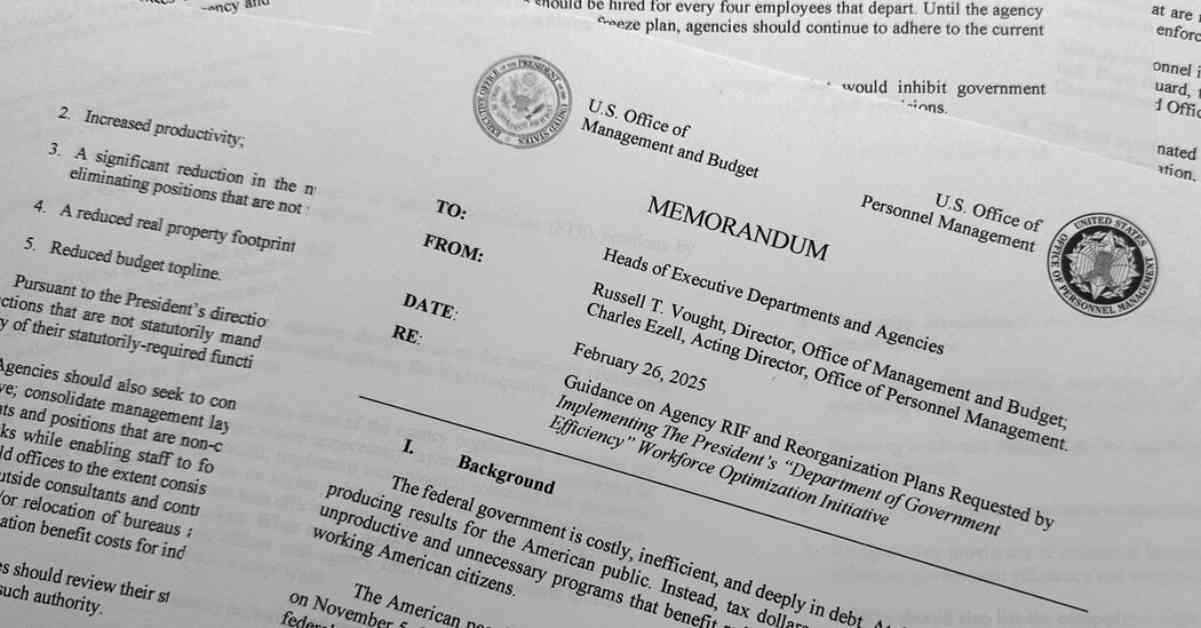
The Trump administration has recently intensified its efforts to cut down on federal workers, with a memo circulating among agency leaders requesting even more job reductions following the termination of numerous employees in the past weeks. This move comes shortly after President Trump expressed his support for Elon Musk and his goal to streamline the federal government, sparking mixed reactions among the public and political figures.
Amidst the ongoing wave of layoffs, thousands of federal employees, particularly those on probationary status, have been let go. Additionally, the Office of Personnel Management revealed that approximately 75,000 workers accepted deferred resignation offers, opting to leave their positions in exchange for seven months of compensation and benefits. This increasing trend of job cuts has raised concerns and stirred up debates across the nation, with polls indicating a growing disapproval of the administration’s approach.
Controversy and Opposition
In light of these developments, Republican House members have encountered strong opposition at their town hall meetings, reflecting the growing unrest and dissatisfaction among constituents. The contentious issue of reducing the federal work force has become a focal point of public discourse, with varying opinions on the potential impacts of such drastic measures.
During his recent cabinet meeting, President Trump reaffirmed his support for Elon Musk’s initiative, emphasizing his commitment to downsizing the government. In a moment of levity, the President jokingly inquired if anyone present harbored displeasure towards Musk, playfully suggesting that dissenters may be escorted out of the meeting. This lighthearted remark amidst a serious policy discussion underscores the complexity and sensitivity surrounding the issue of workforce reductions.
Implications and Challenges Ahead
As Russell T. Vought, the director of the White House budget office, and Charles Ezell, the acting head of the Office of Personnel Management, urge government agencies to prepare for further large-scale reductions, concerns about the potential impact on essential services and organizational efficiency have been raised. The memo circulated by Vought and Ezell emphasized the need to trim down agencies significantly, targeting functions that are not legally mandated.
With deadlines set for submission of plans outlining the next phase of job cuts, agencies are facing the daunting task of restructuring their operations to align with the administration’s directives. The call for maximum elimination of non-essential functions underscores the administration’s commitment to reducing what it perceives as bureaucratic excess and inefficiency. As agencies navigate through these turbulent times, the implications of these workforce reductions on service delivery, employee morale, and overall government operations remain to be seen.
In conclusion, the Trump administration’s escalating layoffs of federal workers have ignited a contentious debate, with conflicting viewpoints on the necessity and impact of these measures. As the government moves forward with its plans for significant job reductions, the challenges and implications of such actions loom large. The evolving landscape of federal workforce dynamics underscores the need for thoughtful consideration, collaboration, and strategic planning to navigate through these uncertain times.