

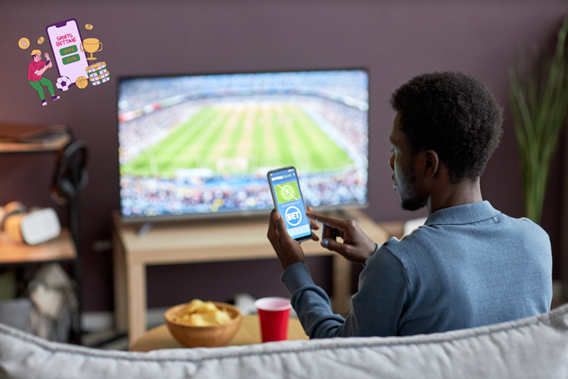
Predictability is not something people usually associate with sports betting. Games are messy. Momentum shifts without warning, and outcomes can turn in a single moment. Yet the platforms people come back to tend to feel steady, no matter what is happening on the pitch. Even when a match is tense, the experience itself stays familiar. That sense of reassurance has very little to do with odds or markets. It comes from the way the platform behaves, quietly and consistently, in the background.
This shows up early, usually within the first few minutes of using a sports betting site like Betway. Learning how to bet online is not just about knowing teams or understanding markets. It is about getting comfortable with how the platform responds. How quickly do pages load, whether buttons react the same way each time, how information is laid out, and whether it stays put. When those things behave consistently, people stop thinking about the interface altogether. Confidence builds naturally, without needing to be forced.
Familiar Patterns Reduce Friction
Predictability also grows out of repetition. When a platform behaves the same way before kickoff, during live play, and across different sports, nothing feels unfamiliar. People move through it on instinct, knowing where things are and how each action will respond without having to think it through.
Platforms like Betway are often cited in this context because their sports sections follow the same structural logic across different competitions. Navigation, market grouping, and live updates behave in familiar ways, allowing attention to stay on the match rather than the interface.
Consistency Before Speed
One of the easy mistakes people make with betting platforms is assuming speed fixes everything. It doesn’t. What matters more is whether the platform feels steady. An interface that rushes updates but keeps moving things around can end up feeling jumpy rather than reliable. Strong platforms focus on controlled updates. Only the information that needs to change does so, while everything else stays put.
This approach helps users keep their bearings. Buttons remain where they were a moment ago. Markets expand and collapse in predictable ways. Pages do not jump or redraw unexpectedly. The result is an experience that feels calm even when the match is anything but.
Feedback That Feels Natural
Every tap or click is a small conversation between the user and the system. Good platforms answer clearly. A selection highlights. A confirmation appears. A brief pause signals that something is processing. None of this is dramatic, but all of it matters.
Behind the scenes, this is handled through careful event handling and timing. Actions are acknowledged quickly, but not abruptly. Feedback feels intentional rather than rushed. When that loop is consistent, users trust that the platform is paying attention.
Designed for Pressure, Not Just Browsing
The real test of predictability comes during live play. Traffic spikes. Odds change quickly. Emotions run high. Platforms that feel smooth in quiet moments but falter under pressure quickly lose trust.
Strong systems are built with those moments in mind. They prioritise stability over novelty and clarity over constant stimulation. The technology works to keep the experience readable when decisions need to be made quickly.
Why Predictability Wins Long Term
Predictability is not about being boring. It is about removing uncertainty where it does not belong. Sports will always provide enough drama on their own. The platforms that people return to are the ones that stay steady, behave as expected, and quietly support the experience without demanding attention. That kind of predictability does not happen by accident. It is engineered.