

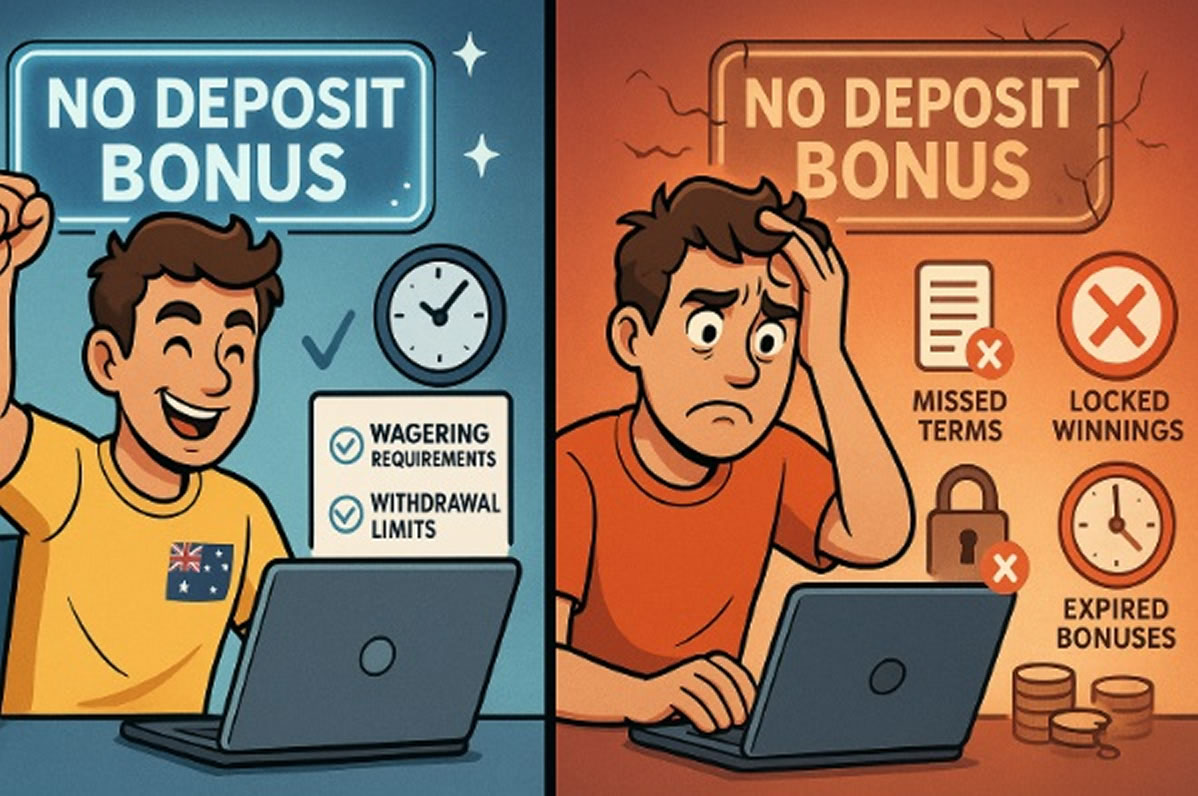
A few months back I put out a survey. Nothing fancy — just a Google Form shared across a couple of gambling forums and some Facebook groups I’m part of. The question was simple: “Tell me about your experience with no deposit casino bonuses in Australia.” I expected maybe 30 or 40 responses. I got 214.
Clearly people had things to say.
I spent the better part of two weeks reading through every single response, categorising them, pulling out patterns. What came out of it was honestly more interesting then I expected. Some of the stories were hilarious, some were frustrating, a few were genuinely concerning. But together they painted a picture of how no deposit bonuses actually play out for real Australian players — not in theory, not in marketing materials, but in actual practice.
Here’s what I found.
The Numbers First
Of the 214 respondents, 187 had claimed at least one no deposit bonus in the past twelve months. The other 27 had looked into it but decided not to for various reasons (more on them later — their reasoning was actually quite smart).
Of those 187 who claimed bonuses:
— 23 managed to successfully withdraw real money at least once. Thats 12.3%.
— 71 said they cleared wagering requirements at some point but hit withdrawal caps or other issues that reduced their winnings significantly.
— 93 never cleared wagering requirements at all. Not once, across multiple attempts in some cases.
The average amount successfully withdrawn among those 23 “winners”? $67. The highest was $340 (one lucky person, low wagering requirement, no withdrawal cap — they described it as “finding a unicorn”). The lowest was $8. Eight dollars. The person who wrote that one added “barely worth the signup process lol” which… yeah fair enough.
What the “Smart 27” Knew That Others Didn’t
Remember those 27 people who looked into no deposit bonuses but decided against claiming them? I found their responses fascinating.
Most common reason — 14 out of 27 — was that they calculated the wagering requirements and decided the maths didn’t work. One person wrote something that stuck with me: “I ran the numbers on like eight different offers and the expected value was negative on every single one once you factor in the wagering. It’s designed that way. The house always wins, even when they’re giving you free money.” Couldn’t have said it better myself honestly.
Six said they didn’t trust the casinos enough to hand over their personal information for verification. Fair point actually — you’re giving your passport details and proof of address to an offshore operator in exchange for ten bucks of bonus credit. When you frame it that way the risk-reward looks pretty different doesnt it.
Four said they were worried about developing gambling habits. These four were probably the smartest people in my entire survey and I say that with complete sincerity.
Three said they just couldn’t be bothered with the signup process. Honest and relatable.
The Stories That Stuck With Me
The Blackjack Guy
One respondent — I’ll call him Marcus — described spending an entire Saturday afternoon playing blackjack trying to clear a $15 no deposit bonus with 40x wagering. He’s a blackjack player, thats his game, thats what he enjoys. After about four hours he checked his wagering progress and discovered he’d barely made a dent. Blackjack contributed 10% at that casino. His $5 bets were counting as 50 cents towards the $600 wagering target.
“I did the maths after the fact,” he wrote. “At that rate I would have needed roughly 1,200 hands of blackjack to clear it. Playing at a normal pace thats something like 20 hours of continuous play. For fifteen dollars of bonus money. I felt like an absolute mug.”
Marcus isn’t stupid — he runs his own accounting firm. He just didn’t know about game weighting because nobody told him and the casino certainly wasn’t going to volunteer that information upfront.
The Withdrawal Nightmare
A woman named — lets say Priya — shared what might be the most frustrating story in the whole survey. She claimed a $20 no deposit bonus, played smart, cleared the 25x wagering requirement after about a week of casual play, and had $178 in her account. She requested a withdrawal.
Then silence. For eleven days.
She contacted support three times. First response: “Your withdrawal is being processed.” Second response: “Please allow 5-7 business days.” Third response: nothing. On day twelve she got an email saying her withdrawal had been denied because she’d “violated bonus terms” — with no specificiciation of which terms or how.
She never got the money. She tried escalating, tried filing complaints, but the casino was based offshore and there wasn’t really anyone to escalate to. No Australian licensing body to complain to because — as we all know by now — thats not how the system works here.
This is exactly the kind of story that makes me want to bang my head against my desk. Everything Priya did was right. She played within the rules, she cleared the wagering, she followed the process. And she still got nothing because the operator was either incompetent or dishonest and there was no regulatory recourse available to her.
The Accidental Success
On the flip side — a guy named Tom claimed a $10 no deposit bonus “mostly out of boredom on a Sunday arvo.” His words. He played some pokies for about forty minutes, won $87, discovered the wagering requirement was only 20x ($200 total), cleared it without really trying, and withdrew the full amount three days later.
“Easiest $87 I’ve ever made,” he wrote. “But I’m pretty sure I just got lucky. I’ve tried other no deposit offers since and haven’t come close to withdrawing again.”
Tom’s experience is actually really representative of what the data showed overall. Success with no deposit bonuses is largely a function of two things: low wagering requirements and plain dumb luck. You can optimise for the first one. The second one is out of your hands completely.
Patterns in the Data
After categorising all 214 responses, some clear patterns emerged that I think are worth sharing.
Wagering Requirements Under 25x Had Way Higher Success Rates
This wasn’t even close. Among respondents who claimed bonuses with wagering under 25x, about 31% reported successfully withdrawing at least something. For those with wagering between 25x and 40x, it dropped to around 11%. Above 40x? Under 4%. The numbers speak for themselves really.
Time Limits Under 7 Days Were a Dealbreaker
Almost nobody who had a time limit of less than a week managed to clear their wagering. A few people did it with 72-hour windows but they described it as “stressful” and “not fun at all.” One person with a 24-hour limit called it “basically impossible unless you sit there all day and get incredibly lucky.”
The people who had the best experiences almost universally had time limits of 14 days or more. Enough breathing room to play casually without feeling pressured into marathon sessions.
Customer Support Quality Predicted Overall Satisfaction
This one was interesting. I asked respondents to rate their casino’s customer support on a 1-5 scale. The correlation between support rating and overall satisfaction with the no deposit bonus experience was really strong. People who rated support 4 or 5 out of 5 were roughly three times more likely to describe their overall experience as “positive” compared to those who rated support 1 or 2.
Makes sense when you think about it. If you can get quick, helpful answers to your questions — about wagering progress, about withdrawal timelines, about game restrictions — the whole experience feels more trustworthy and manageable. If you’re shouting into a void every time you need help, even a good bonus feels frustrating.
The Comparison Site Problem
I asked where people found out about the no deposit offers they claimed. Overwhelmingly the answer was comparison and review websites. But — and this is the concerning part — only about 15% said they checked the full terms and conditions before signing up. The rest relied on the summary information provided by the comparison site.
Problem is, most comparison sites only show the bonus amount and maybe the wagering multiplier. They don’t mention game restrictions, time limits, or withdrawal caps. So people are making decisions based on incomplete information and then getting blindsided by terms they didn’t know existed.
The one exception that came up multiple times in responses was https://au.crazyvegas.com/no-deposit-bonus/ — several respondents specifically mentioned it as giving more detailed breakdowns then most other sites. Not everyone used it obviously, but the people who did seemed to have a clearer picture of what they were getting into before they signed up.
The Regulatory Gap That Keeps Coming Up
Priya’s story highlights something that came through in alot of the survey responses: there’s a genuine protection gap for Australian players when things go wrong with offshore casino operators.
The Interactive Gambling Act has been around since 2001 and the 2017 ammendments gave the ACMA more power to block unlicensed operators. They’ve done good work — hundreds of sites blocked, ongoing enforcement actions. Nobody can say they’re not trying.
But blocking a site and providing individual player recourse are two different things. If a licensed UK operator screws you over, you can take it to the Gambling Commission. They’ll investigate, they can impose fines, they can revoke licenses. There’s a process. In Australia, if an offshore operator denies your legitimate withdrawal… what exactly do you do? Write a sternly worded email? Post about it on Reddit? Those aren’t solutions — they’re coping mechanisms.
The state and territory patchwork adds confusion on top of the federal framework. Different rules in different jurisdictions, different interpretations, different enforcement priorities. I had respondents from Queensland and Victoria describe completely different experiences with the same casino, partly because of how different state regulations interact with federal law.
I’m not saying the system is broken beyond repair. The ACMA is doing meaningful work and the National Consumer Protection Framework introduced genuine improvements. But there are gaps, and no deposit bonus players — who are often new to online gambling and don’t know the landscape yet — fall through those gaps more then anyone.
What the Survey Changed About My Own Advice
I’ve been writing about this stuff for years and I’ll admit the survey shifted some of my thinking. A few things I’d emphasise more strongly now then I did before:
The wagering threshold matters more then I gave it credit for. I used to tell people “anything under 40x is reasonable.” Looking at the actual data, I’d revise that down to 25x or under. The success rate cliff between sub-25x and 25-40x is dramatic.
Customer support should be tested before claiming the bonus, not after. Multiple respondents said they only contacted support after running into problems. By then it’s too late to learn that support is useless. Ask a question first. See how they handle it. Then decide whether to proceed.
The privacy trade-off is underrated. Those 6 people who declined bonuses because they didn’t want to share personal documents with offshore operators? They had a point I’d been somewhat dismissing. You’re handing over sensitive identification to companies that may not have the same data protection obligations as Australian businesses. Thats a legitimate concern that deserves more weight in the decision-making process.
Time limits need more attention. I used to mention them as an afterthought. After seeing how many people got burned by short timeframes, I’d now say the time limit is the second most important factor after wagering requirements.
Responsible Gambling — What 214 People Taught Me
I included a question in the survey about whether no deposit bonuses had ever led to unplanned real-money deposits. The answer was sobering. 41% of respondents said yes — they’d deposited their own money at a casino they originally joined for a no deposit bonus. And of those, about half said the deposit was impulsive rather then planned.
That’s roughly one in five people in my survey making unplanned real-money deposits as a direct result of a no deposit bonus funnel. Thats not nothing. Thats a significant behavioural pattern and it should give everyone — players, operators, regulators — something to think about.
The National Consumer Protection Framework has good measures in place. Activity statements help players track spending. Mandatory ID verification creates friction that can slow down impulsive behavior. Restrictions on certain inducements limit how aggressively operators can market to vulnerable people.
But at the end of the day, you’re the last line of defense for yourself. Set limits. Actual specific limits, written down, before you start. Not “I’ll be sensible” — that means nothing when you’re in the moment. A dollar amount and a time limit. Stick to both.
And please — if gambling is causing problems in your life, reach out. Gambling Help Online at gamblinghelponline.org.au. National Helpline 1800 858 858. Free, confidential, available 24/7. Multiple people in my survey mentioned these services positively. Theres no weakness in asking for help.
So What’s the Takeaway From All This
Two hundred and fourteen people told me their stories. The overall message? No deposit bonuses can work, but they work for far fewer people then the marketing suggests, and the margin between a decent experience and a terrible one usually comes down to information.
The people who did well understood the terms before signing up. They picked low-wagering offers. They tested customer support early. They set time limits for themselves. They didn’t chase unrealistic outcomes.
The people who had bad experiences went in blind, got seduced by big headline numbers, ignored the fine print, and were surprised when reality hit. I don’t blame them — the industry could do alot better at being upfront about how these promotions actually work.
My hope is that this changes. The trend towards transparency is real and it’s accelerating. Personalised promotions are replacing blanket offers. Regulatory pressure is increasing. Players are getting savvier and sharing information more freely. The cowboys are being pushed out, slowly.
But we’re not there yet. Until we are — do the maths, read the terms, and take care of yourselves.
Cheers.
This article is based on an informal survey and reflects the author’s analysis and opinions. It is not gambling advice. Online gambling regulations vary by jurisdiction — make sure you understand what applies in your area. Gamble responsibly.
About the Author
Kayla McBrien has been writing about online gambling in the Asia-Pacific region for longer then she’d like to admit. She started in regulatory analysis, moved into consumer advocacy, and now spends most of her time trying to bridge the gap between what casinos tell players and what players actually need to know. She runs a reader survey every quarter because apparently she enjoys reading 200+ emails about wagering requirements. Her work appears in several industry publications.